2 Books · 16 Saved Quotes
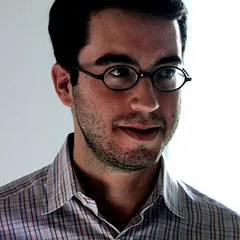
Jonathan Safran Foer
American novelist (born 1977)
Books by Jonathan Safran Foer (2)
Extremely Loud & Incredibly Close
Love, Longing & Fiction · 2005
Everything is Illuminated
Philosophy & Inner Life · 2002
Saved Quotes (16)
“Sometimes I can hear my bones straining under the weight of all the lives I'm not living.”
“You cannot protect yourself from sadness without protecting yourself from happiness.”
“Why didn't I learn to treat everything like it was the last time. My greatest regret was how much I believed in the future.”
“I regret that it takes a life to learn how to live.”
“Time was passing like a hand waving from a train I wanted to be on.
I hope you never have to think about anything as much as I think about you.”
“He awoke each morning with the desire to do right, to be a good and meaningful person, to be, as simple as it sounded and as impossible as it actually was, happy. And during the course of each day his heart would descend from his chest into his stomach. By early afternoon he was overcome by the feeling that nothing was right, or nothing was right for him, and by the desire to be alone. By evening he was fulfilled: alone in the magnitude of his grief, alone in his aimless guilt, alone even in his loneliness. I am not sad, he would repeat to himself over and over, I am not sad. As if he might one day convince himself. Or fool himself. Or convince others--the only thing worse than being sad is for others to know that you are sad. I am not sad. I am not sad. Because his life had unlimited potential for happiness, insofar as it was an empty white room. He would fall asleep with his heart at the foot of his bed, like some domesticated animal that was no part of him at all. And each morning he would wake with it again in the cupboard of his rib cage, having become a little heavier, a little weaker, but still pumping. And by the midafternoon he was again overcome with the desire to be somewhere else, someone else, someone else somewhere else. I am not sad.”
“She was a genius of sadness, immersing herself in it, separating its numerous strands, appreciating its subtle nuances. She was a prism through which sadness could be divided into its infinite spectrum.”
“I think and think and think, I‘ve thought myself out of happiness one million times, but never once into it.”
“When I looked at you, my life made sense. Even the bad things made sense. They were necessary to make you possible.”
“Do you think I'm wonderful? she asked him one day as they leaned against the trunk of a petrified maple. No, he said. Why? Because so many girls are wonderful. I imagine hundreds of men have called their loves wonderful today, and it's only noon. You couldn't be something that hundreds of others are.”
“In bed that night I invented a special drain that would be underneath every pillow in New York, and would connect to the reservoir. Whenever people cried themselves to sleep, the tears would all go to the same place, and in the morning the weatherman could report if the water level of the Reservoir of Tears had gone up or down, and you could know if New York is in heavy boots.”
“I am always sad, I think. Perhaps this signifies that I am not sad at all, because sadness is something lower than your normal disposition, and I am always the same thing. Perhaps I am the only person in the world, then, who never becomes sad. Perhaps I am lucky.”
“Every widow wakes one morning, perhaps after years of pure and unwavering grieving, to realize she slept a good night's sleep, and will be able to eat breakfast, and doesn't hear her husband's ghost all the time, but only some of the time. Her grief is replaced with a useful sadness. Every parent who loses a child finds a way to laugh again. The timbre begins to fade. The edge dulls. The hurt lessens. Every love is carved from loss. Mine was. Yours is. Your great-great-great-grandchildren's will be. But we learn to live in that love.”
“I got tired, I told him. Not worn out, but worn through. Like one of those wives who wakes up one morning and says I can't bake any more bread.
You never bake bread, he wrote, and we were still joking.
Then it's like I woke up and baked bread, I said, and we were joking even then. I wondered will there come a time when we won't be joking? And what would it look like? And how would that feel?
When I was a girl, my life was music that was always getting louder. Everything moved me. A dog following a stranger. That made me feel so much. A calender that showed the wrong month. I could have cried over it. I did. Where the smoke from the chimney ended. How an overturned bottle rested at the edge of a table.
I spent my life learning to feel less.
Every day I felt less.
Is that growing old? Or is it something worse?
You cannot protect yourself from sadness without protecting yourself from happiness.”
“I went to a tattoo parlor and had YES written onto the palm of my left hand, and NO onto my right palm, what can I say, it hasn't made my life wonderful, its made life possible, when I rub my hands against each other in the middle of winter I am warming myself with the friction of YES and NO, when I clap my hands I am showing my appreciation through the uniting and parting of YES and NO, I signify "book" by peeling open my hands, every book, for me, is the balance of YES and NO, even this one, my last one, especially this one. Does it break my heart, of course, every moment of every day, into more pieces than my heart was made of, I never thought of myself as quiet, much less silent, I never thought about things at all, everything changed, the distance that wedged itself between me and my happiness wasn't the world, it wasn't the bombs and burning buildings, it was me, my thinking, the cancer of never letting go, is ignorance bliss, I don't know, but it's so painful to think, and tell me, what did thinking ever do for me, to what great place did thinking ever bring me? I think and think and think, I've thought myself out of happiness one million times, but never once into it.”
“Jonathan Safran Foer’s 10 Rules for Writing:
1.Tragedies make great literature; unfathomable catastrophes (the Holocaust, 9/11) are even better – try to construct your books around them for added gravitas but, since those big issues are such bummers, make sure you do it in a way that still focuses on a quirky central character that’s somewhat like Jonathan Safran Foer.
2. You can also name your character Jonathan Safran Foer.
3. If you’re writing a non-fiction book you should still make sure that it has a strong, deep, wise, and relatable central character – someone like Jonathan Safran Foer.
4. If you reach a point in your book where you’re not sure what to do, or how to approach a certain scene, or what the hell you’re doing, just throw in a picture, or a photo, or scribbles, or blank pages, or some illegible text, or maybe even a flipbook. Don’t worry if these things don’t mean anything, that’s what postmodernism is all about. If you’re not sure what to put in, you can’t go wrong with a nice photograph of Jonathan Safran Foer.
5. If you come up with a pun, metaphor, or phrase that you think is really clever and original, don’t just use it once and throw it away, sprinkle it liberally throughout the text. One particularly good phrase that comes to mind is “Jonathan Safran Foer.”
6. Don’t worry if you seem to be saying the same thing over and over again, repetition makes the work stronger, repetition is good, it drives the point home. The more you repeat a phrase or an idea, the better it gets. You should not be afraid of repeating ideas or phrases. One particularly good phrase that comes to mind is “Jonathan Safran Foer.”
7. Other writers are not your enemies, they are your friends, so you should feel free to borrow some of their ideas, words, techniques, and symbols, and use them completely out of context. They won’t mind, they’re your friends, just like my good friend Paul Auster, with whom I am very good friends. Just make sure you don’t steal anything from Jonathan Safran Foer, it wouldn’t be nice, he is your friend.
8. Make sure you have exactly three plots in your novel, any more and it gets confusing, any less and it’s not postmodern. At least one of those plots should be in a different timeline. It often helps if you name these three plots, I often use “Jonathan,” “Safran,” and “Foer.”
9. Don’t be afraid to make bold statements in you writing, there should always be a strong lesson to be learned, such as “don’t eat animals,” or “the Holocaust was bad,” or “9/11 was really really sad,” or “the world would be a better place if everyone was just a little bit more like Jonathan Safran Foer.”
10. In the end, don’t worry if you’re unsuccessful as a writer, it probably wasn’t meant to be. Not all of us are chosen to become writers. Not all of us can be Jonathan Safran Foer.”